
Blog
Step-by-Step ADAS Sensor Calibration After Car Glass Repair in Ryde
Modern vehicles are engineered to react and assist long before a driver does. From detecting lane markings to monitoring traffic ahead, today’s safety systems rely on precise alignment and accurate data to function properly. This level of precision becomes crucial after vehicle repairs that affect visibility and sensor positioning.
Following a car glass repair, systems linked to windshield sensors and forward-facing cameras often require recalibration to restore precision.
Whether it is car window repair or more complex auto repair, ensuring these systems are correctly recalibrated is a critical part of responsible car maintenance. In New South Wales, this process also plays an important role in meeting NSW safety standards, helping drivers stay compliant and safe on the road.
What do ADAS and Windscreen-Mounted Technology Mean?
ADAS refers to vehicle technologies designed to assist drivers and reduce collision risks. These systems depend on precision-aligned cameras and sensors, many of which are mounted directly behind the windscreen.
Common ADAS features include:
- Automatic emergency braking
- Traffic sign recognition
- Forward collision alerts
- Lane departure warning
- Adaptive cruise control
Because these features depend on accurate visual data, even slight windscreen movement during car window repair can affect calibration.
The Importance of ADAS Calibration After Car Glass Repair
After a windscreen is replaced, the original positioning of cameras and sensors is altered. Without camera recalibration, the system may miscalculate road conditions, creating serious safety risks.
Failing to recalibrate windshield sensors can result in:
- False alerts or warning failures
- Non-compliance with NSW safety standards
- Incorrect braking or steering intervention
- Reduced effectiveness of driver assistance features
Professional auto repair facilities are required to follow manufacturer specifications to ensure post-repair safety and system accuracy.
Step-by-Step ADAS Sensor Calibration Process
Step 1: Pre-Calibration Vehicle Inspection
Before calibration starts, technicians conduct a detailed assessment of the vehicle. This ensures the vehicle meets all calibration requirements.
Checks include:
- Vehicle ride height compliance
- Proper tyre pressure and alignment
- Correct windscreen installation
- Clean and undamaged camera lenses
Step 2: Diagnostic System Scan
A complete diagnostic scan is performed using manufacturer-approved software. This identifies any existing faults or ADAS errors that may affect calibration.
The scan helps in verifying:
- Communication between sensors
- ADAS system readiness
- Software compatibility
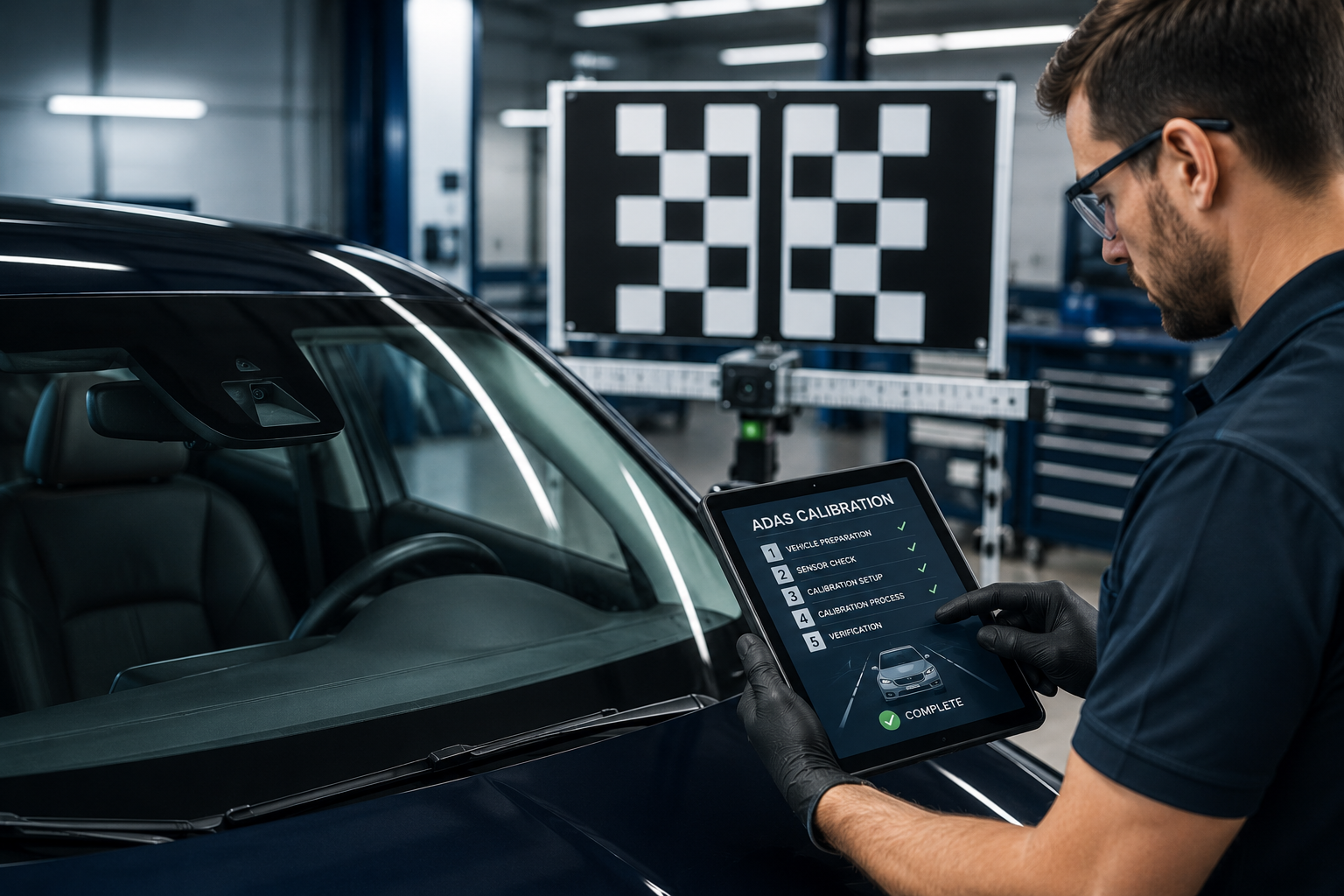
Step 3: Static ADAS Calibration Setup
This is performed in a well-controlled workshop environment using specialised calibration targets.
This process involves:
- Positioning the vehicle on a level surface
- Placing calibration boards at precise distances
- Aligning cameras using factory specifications
Static calibration is required after car glass repair, when forward-facing cameras are involved.
Step 4: Dynamic Calibration
Some vehicles require road-based testing, which involves driving the vehicle under controlled conditions.
During this process:
- The vehicle is driven at specified speeds
- Road markings and traffic signs are detected
- The system self-adjusts based on real-world input
Dynamic calibration ensures windshield sensors respond accurately in live driving conditions around Ryde and NSW roads.
Step 5: Post-Calibration Validation
Once calibration is complete, technicians perform validation checks to confirm system accuracy.
This includes:
- Clearing fault codes
- Verifying system data alignment
- Conducting functional safety tests
Legal and Safety Compliance in NSW
In New South Wales, vehicle safety regulations require that all safety systems function as designed. Improper calibration after car glass repair may lead to:
- Insurance claim disputes
- Increased liability in accidents
- Roadworthiness issues
What Not to Do After Car Glass Repair
- Driving without recalibration
- Skipping diagnostic scans
- Assuming ADAS self-corrects automatically
- Using non-certified repairers
Professional recalibration protects both safety systems and long-term car maintenance outcomes.
Book Professional ADAS Calibration with Kimtec Automotive
At Kimtec Automotive, we believe vehicle safety is about precision, experience, and accountability. As a reliable local workshop, we understand how modern vehicles are engineered and how every system works together. From diagnostics and mechanical servicing to post-repair calibration, we focus on delivering repairs that restore safety.
When your vehicle undergoes car glass repair or car window repair, we ensure essential systems, such as windshield sensors, are accurately aligned through professional camera recalibration.
Our approach to auto repair takes a complete view of your vehicle’s safety systems, long-term car maintenance and compliance with NSW safety standards.
If you are looking for a workshop that values transparency, safety-focused repairs carried out by experienced technicians, contact us today to book your repairs and services.